March Update: Key Wins Across Our Priority States
Friends,
It’s been a month since our last update on the momentum building for criminal justice reform legislation across our priority states, and the pace is intensifying. As our work progresses, we want to share an inside look into what is really happening inside these statehouses, including the negotiations, the compromises, the breakthroughs, and the ongoing challenges.
Most importantly, we want to share some exciting milestones a few of our top priority bills have reached: passing their first chamber (the House or Senate).
MILESTONES REACHED

Prison Oversight Funding
This year in Arizona, our top priority is to fund the Independent Correctional Oversight Office, and momentum for funding bills is strong. Senate Bill 1032, sponsored by Sen. Shawnna Bolick (R), and House Bill 2063, sponsored by Rep. Walt Blackman (R), both passed their first chamber unanimously.
This level of support for these two bills is significant and unprecedented.Typically, funding bills are heard in committees but are not put up for floor votes; most of these bills are saved for later in the session when the House and Senate begin negotiations on the budget.
That kind of across-the-board support represents a strong statement from the state legislature: it’s time to bring more transparency to the state prison system. We will continue to push for funding of this office when budget discussions begin later in session.
In recent committee hearings, legislators also heard powerful testimony from Crystal Fox, co-founder of Arizona Mad Moms. She shared her son Joshua’s experience of inadequate treatment for his well-documented mental health conditions while incarcerated, which tragically culminated in his death by suicide less than two days after his transfer to state prison. We are deeply grateful to Crystal for sharing her family’s story and for underscoring the urgent need for reform.
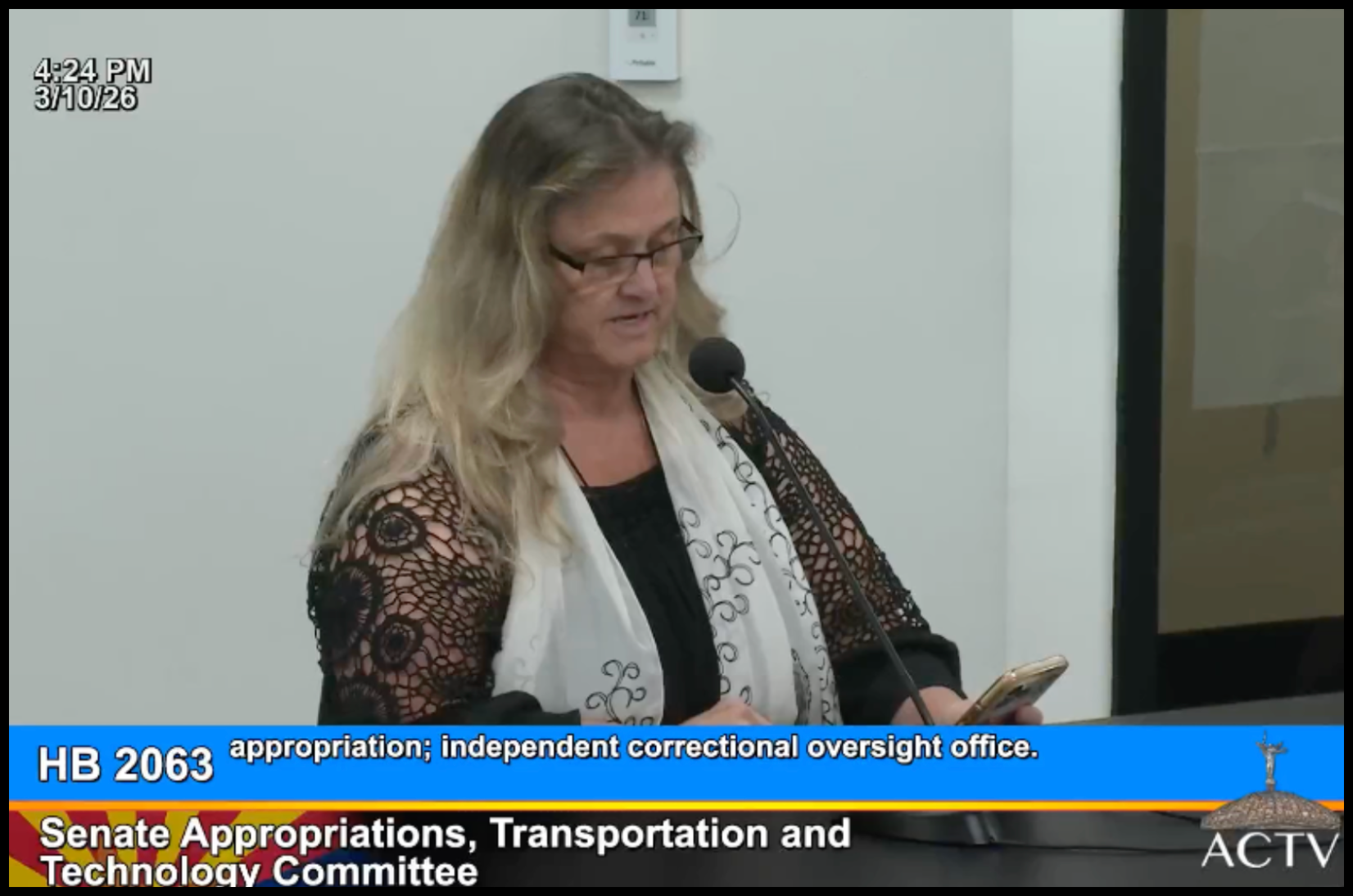
Crystal Fox testifying in favor of funding the Independent Correctional Oversight Office in the Senate Appropriations, Transportation and Technology Committee

Background Study Legislation
In a hard-won step forward, House File 3174, introduced by Representative Cedrick Frazier (DFL), secured a hearing this session despite a packed legislative calendar that made it a long shot.
The bill addresses a critical gap in Minnesota’s background study process, which can permanently bar people from working in healthcare and social services even after they have demonstrated rehabilitation. With no current path to reconsider these disqualifications, many are shut out from meaningful employment, even with a nationwide shortage in qualified workers to fill these open positions.
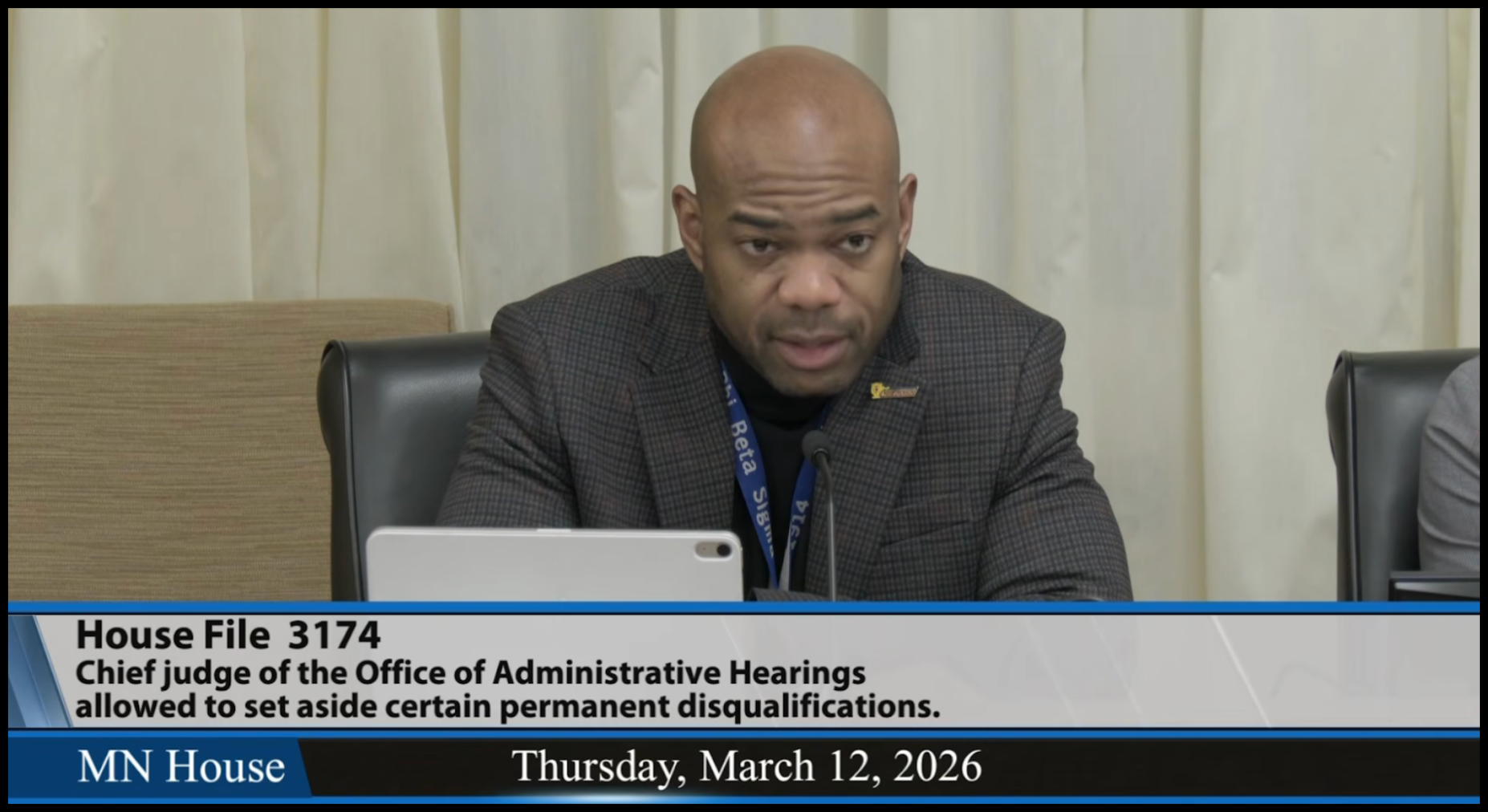
Representative Cedrick Frazier (DFL) introducing House File 3174 before the House Human Service Finance and Policy Committee.
Having a committee hearing makes the bill more likely to be included in a final omnibus that is sent to the Governor for signature, though the beginning of that process won’t begin until mid-April.
Bad Bill stopped: Criminalization of Possession of Kratom. A defensive win!
We are pleased that Senate File 3711, was removed from this week’s Senate Judiciary and Public Safety Committee hearing. The bill would classify kratom as a Schedule II substance, making simple possession a felony punishable by up to five years in prison and a $10,000 fine.
We joined partner organizations to urge committee members to reject this approach, noting that it would perpetuate punitive drug policy without improving public safety or reducing substance use. We appreciate the committee’s responsiveness.

Mandatory waiver of remaining court debt following consistent payments + Clean Slate Implementation
Senate Bill 1450, sponsored by Sen. Julie Daniels (R), requires courts to waive remaining court debt for defendants who have paid consistently for 24 months. Under current law, courts may waive this debt, but are not required to do so, resulting in inconsistent and often arbitrary outcomes for individuals working to reenter society despite sustained good-faith efforts.
We’re pleased to report that the bill passed the Senate with a unanimous vote! It now heads over to the House, where it will be carried by Rep. Brian Hill (R). We are working closely with Prison Fellowship to advance this legislation.
This bill was inspired in part by hearing from impacted individuals who explained the importance of this relief. We are especially grateful to Tiffani Shaw, who authored a recent Tulsa World op-ed highlighting the positive impact this bill would have on the workforce. Tiffani benefited from relief from a discretionary waiver from her judge, and has helped elevate the stories of others denied that same relief, underscoring how arbitrary and harmful current practices can be.
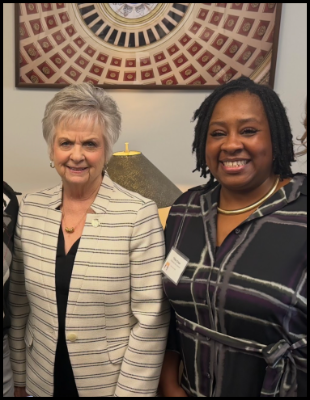
Sen. Julie Daniels (R), sponsor of SB 1450 and Tiffani Shaw
Clean Slate implementation
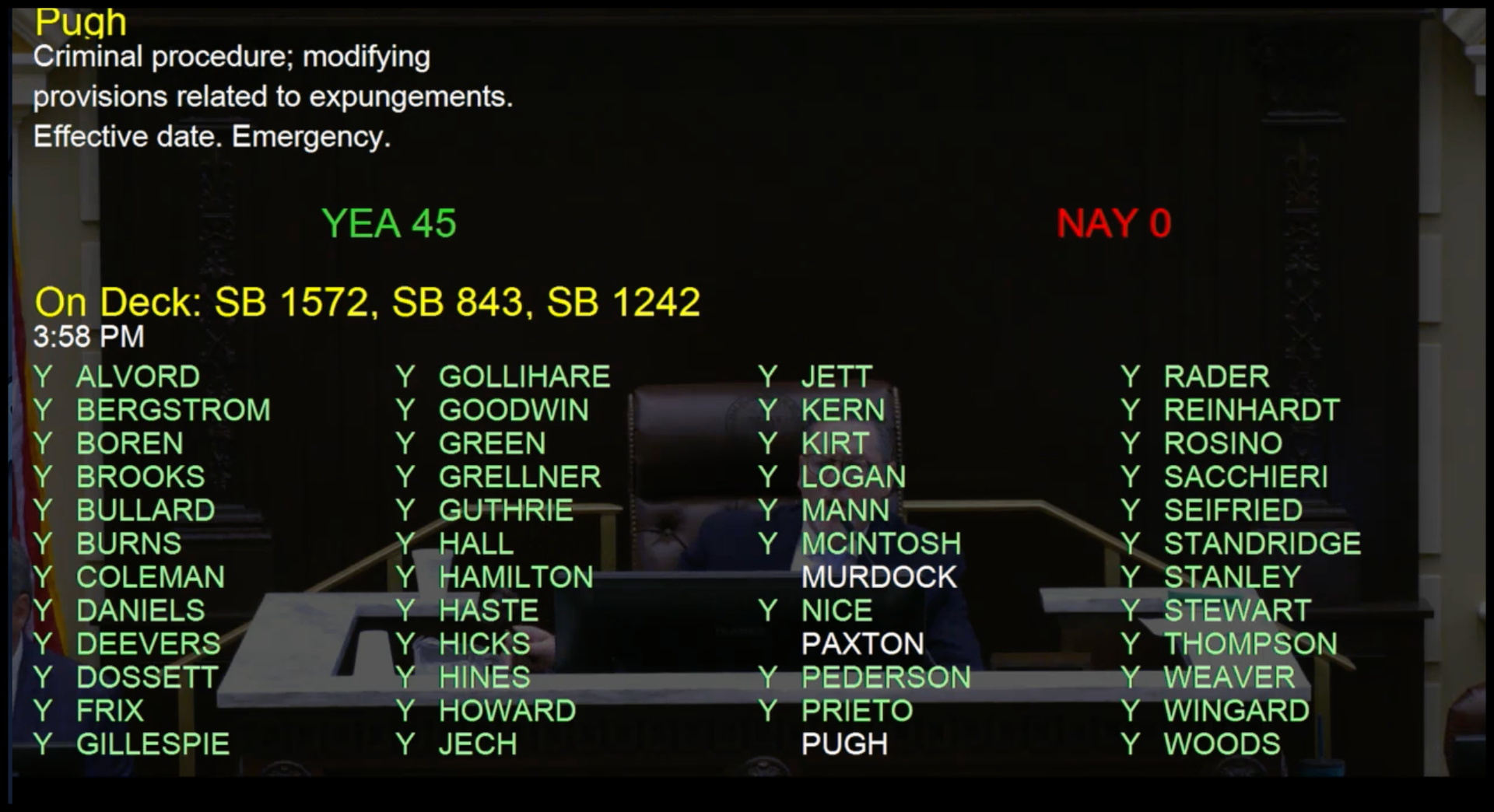
Senate Bill 2030, sponsored by Sen. Adam Pugh (R), is a Clean Slate implementation bill that JAN is supporting in a coalition of advocacy groups, such as Oklahomans for Criminal Justice Reform, Right on Crime, and the national Clean Slate Initiative to support the bill. The bill passed the Senate with a unanimous 45-0 vote yesterday!
OTHER UPDATES ON JAN-SUPPORTED BILLS

Ending incarceration as a sanction for nonpayment of court debt
House Bill 2825, sponsored by Rep. Chris Lopez (R), passed the Senate Judiciary Committee this week, following its unanimous passage in the House last month. This bill removes arrest and incarceration as consequences for nonpayment of court debt.
Narrowly tailored conditions of probation supervision
Senate Bill 1662, sponsored by Sen. Shawnna Bolick (R), passed the Senate with a 27-2 vote and passed the House Government Committee this week. The bill ensures that probation conditions are focused, effective, and tailored to the specific individual.
Misdemeanor expungement
Senate Bill 1140, also sponsored by Sen. Shawnna Bolick (R), passed the Senate with a 27-1 vote, and passed the House Government Committee this week. We’re excited to be supporting this effort alongside the Alliance for Safety and Justice to give more Arizonans a fresh start.
Fee elimination
House Bill 2265, sponsored by Representative Neal Carter (R), received a successful vote in its first Senate committee hearing last week after passing the House with a 55-2 vote. This bill eliminates three fees associated with their exercise of one's constitutional rights: public defender fees, jury fees, and appellate filing fees.

Pretrial data collection
JAN is supporting another bill in Minnesota this session, House File 1775, sponsored by Representative David Pinto (DFL). This bill requires the aggregation of key pretrial data, an effort we have long supported and were pleased to back with written testimony last week. The bill recently received a unanimous vote in the House Public Safety committee!
Currently, data regarding pretrial processes is not centralized in Minnesota, making meaningful analysis difficult. This bill begins to close that gap and empowers lawmakers to make more informed decisions going forward.
Civil cause of action/suing law enforcement for constitutional violations
The package of bills being supported by (House File 3414, House File 3477, Senate File 3628, Senate File 3629) moving through the committee process. This effort, led by House Majority Floor Leader Jamie Long (DFL), Senate President Bobby Joe Champion (DFL), and Senator Omar Fateh (DFL), allows Minnesotans to sue for civil and monetary damages for constitutional violations committed by federal or state law enforcement.
We expect that these bills will continue to receive hearings in their respective chambers and may ultimately be considered by a conference committee or as part of a larger omnibus bill.

Ending cost arrest warrant for unpaid fines and fees
House Bill 3321, sponsored by Rep. Mike Osburn (R), is scheduled to be heard for a House floor vote this week. Instead of ending the practice of issuing cost arrest warrants for people who have fallen behind on paying their court fines and fees or who fail to appear at a cost hearing, situations that are not criminal offenses, the bill will be amended to require data collection on how often cost arrest warrants are executed, which third-party vendors are used to collect debt, and more. While this is scaling back the impact of the bill, we are very encouraged to have the vehicle moving forward, and are immensely thankful to Rep. Osburn for his continued efforts to keep this issue moving.
We also want to thank attorney Ed Wunch for sharing with us his insight into how cost arrest warrants and debt collection processes work in the state.