Our 2026 State Priorities: A Big Year for Smart Justice Reform
Friends,
With state legislative sessions officially underway or kicking off soon, we are excited to share the bold state-level reforms we are working to advance in 2026. We are focused on key states where our legislative champions are fired up and where meaningful change is within reach.
Alongside our strong legislative leaders and coalition of advocacy groups, impacted individuals, employers, business groups, and stakeholders, we are optimistic that these efforts will result in laws signed with an immediate impact.
Some of the bills we're excited to advocate for in 2026 will:
end arrest warrants for people unable to pay court fines and fees
fund independent oversight of Arizona’s prison system
reform driver’s license suspensions tied to unpaid traffic tickets with retroactive applicability
implement Clean Slate automatic expungement in Oklahoma
require waiver of remaining court debt after consistent payments, and more.
Below is the full list of bills we’re championing, supporting, or working in a coalition to help advance alongside our fantastic legislative champions in our priority states.

This year represents JAN’s 11th legislative session in Arizona. Since beginning our work in Arizona in 2016, JAN has contributed to the passage of 25 bills and one executive order. In 2025, we advocated for the following bills that were signed into law:
Senate Bill 1507: created an independent correctional oversight office
House Bill 2720: ended the crack-cocaine sentencing disparity
Senate Bill 1343: expanded access to probation courtesy transfers
This year, JAN will be putting our advocacy and lobbying weight behind the following priorities:
1. Correctional Oversight Funding
Building on last year’s successful enactment of Senate Bill 1507, our top priority this year is securing the funding needed to make that office operational. Senate Bill 1032, sponsored by Sen. Shawnna Bolick (R), appropriates $1.5 million for the office’s operational needs. It represents the final step in implementing a shared vision for a correctional system centered on accountability, transparency, and better outcomes. The bill received a unanimous vote at its first committee hearing, where our Senior State Policy Manager, Estrella López, provided testimony in support.
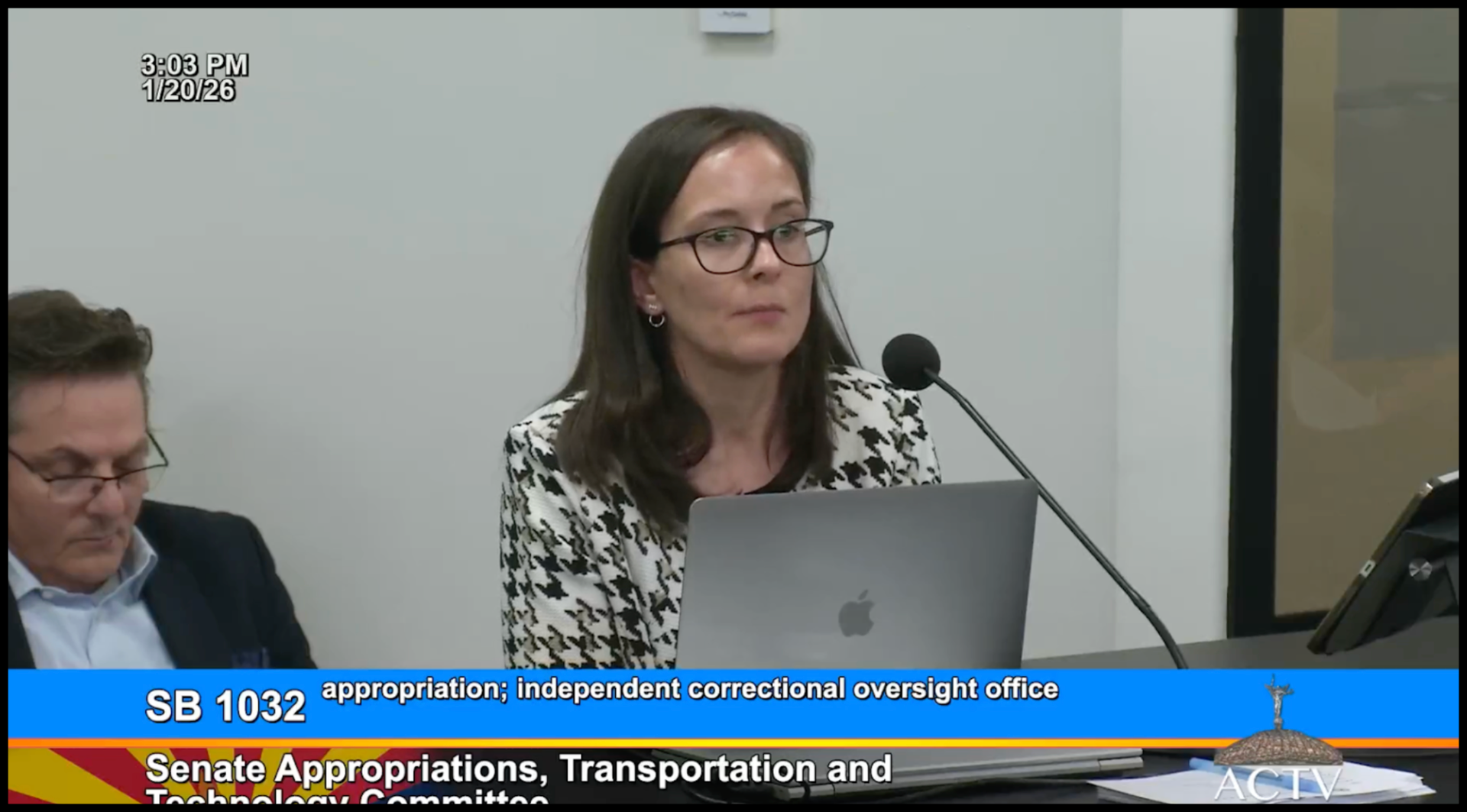
JAN’s Senior State Policy Manager, Estrella López, testifying before the Arizona Senate Appropriations Committee in support of SB 1032, Independent Correctional Oversight Office funding. The bill passed committee with a unanimous 10-0 vote.
Rep. Walt Blackman (R), has filed House Bill 2063 with the same language in the House. Sen. Bolick and Rep. Blackman led on the issue of independent oversight last year, and we are honored to continue to partner with them.
2. Ending incarceration for failure to pay court fines and fees
We’re thrilled to be working with Rep. Chris Lopez (R) on House Bill 2825. The bill eliminates incarceration as a sanction for nonpayment of court debt and streamlines existing civil procedures for recouping costs while adding due process protections. This bill balances fairness and accountability and makes clear that debt will not result in a loss of liberty.
3. Right-sizing conditions of supervision
Our third top priority for the year is a soon-to-be-introduced Senate Bill, sponsored by Sen. Shawnna Bolick (R), which requires that conditions of supervision are narrowly tailored to an individual’s risks and needs, ensuring a more precise, targeted allocation of judicial resources for probation in the state.
Other bills we’re playing a supplementary advocacy role on:
1. Narrow fee elimination
House Bill 2265, sponsored by Representative Neal Carter (R) eliminates three fees associated with a defendant’s exercise of their constitutional rights: public defender, jury, and appellate fees. This advocacy effort is being led by the Fines and Fees Justice Center and Stand for Children Arizona.
2. Misdemeanor expungement
Senate Bill 1140, sponsored by Sen. Shawnna Bolick (R), creates a process for allowing certain misdemeanor arrests and convictions to be expunged. This bill will build upon efforts from previous years, including a JAN-supported Senate Bill 1639 in 2024 that expanded record sealing eligibility. However, the public can still see that a person has a sealed record; expungement would allow these records to disappear from public view and improve access to employment, housing, and education—all of which work to reduce the risk of future recidivism. This effort is being led by Alliance for Safety and Justice.
3. Prohibiting prosecution of victims of sex trafficking
We are publicly supporting House Bill 2721, sponsored by Rep. Selina Bliss (R), which prohibits prosecuting victims of sex trafficking for a sex trafficking offense and includes provisions that allow previously convicted individuals to petition the court to vacate or modify their convictions. This is a bipartisan bill, with Sen. Analise Ortiz (D) cosponsoring the bill.

This year represents JAN’s 11th legislative session in Minnesota. Since beginning our work in Minnesota in 2016, JAN has contributed to the passage of 16 bills into law.
In 2025, we prioritized the implementation of the state’s Clean Slate Law, legislation that JAN was critical in shaping and advocating for the passage of in 2023. The Minnesota Clean Slate Act took effect January 1, 2025, and since that point:
1,545,857 records have been sealed, representing 72.4% of eligible records. We remain committed to working closely with our state partners to support ongoing implementation of this law so it fulfills its intent: increasing access to housing, education, and employment, reducing recidivism, and improving public safety and community well-being.
In Minnesota, durable, transformative change requires sustained, multi-year engagement. This year, we will be primarily focused on continued implementation of Clean Slate, while also building the groundwork necessary for major change over the next couple of years. We will put our legislative advocacy efforts behind the following:
We will put our legislative advocacy efforts behind the following:
1. Drug-free school zone reform
House File 2980 and Senate File 3207, sponsored by Rep. Aisha Gomez (DFL) and Sen. Clare Oumou Verbeten (DFL), modify the existing drug-free school zone law to make it more targeted and fair and establish greater consistency across the state. We are continuing to have conversations with stakeholders and other advocacy groups to find common ground for policy change, and are hopeful these will be the start of that broader conversation.
2. Creating pathways to overcome permanent background disqualifications
We are working with Rep. Cedrick Frazier (DFL) on House File 3174, which expands the authority to set aside certain permanent background study disqualifications that would otherwise bar individuals from working or volunteering in certain licensed programs. The Institute for Justice is playing a key advocacy role on this bill as well.

Our advocacy in New Mexico has contributed to the passage of six bills that were signed into law in the state since 2019. In 2025, we supported Sen. Antonio Maestas (D) to support the passage of Senate Bill 375, which eliminated parole fees of up to $1,800 per year and created pathways for early release from community supervision.
This year, the state has a 30-day session that is already underway. Governor Lujan Grisham (D) and legislative leadership are focused on public safety challenges, particularly at the intersection of child and youth welfare, and have called for tougher sentences. We were on the ground ahead of session, meeting directly with legislators and key executive-branch and system leaders to discuss the challenges and opportunities in this space.
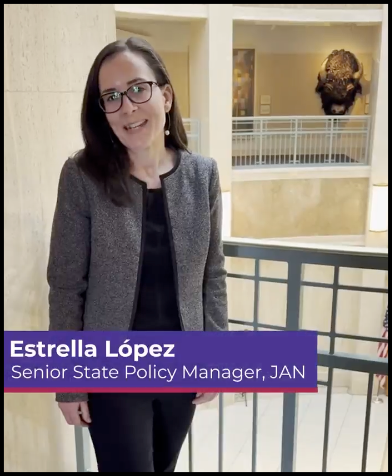
This session, we are focused on mitigation efforts on bills that result in tougher penalties and punitive measures, including but not limited to:
1. House Bill 105 gives courts jurisdiction over juvenile judgments for longer periods.
2. House Bill 125 will result in more children being prosecuted as adults: a policy that has been demonstrated to increase the likelihood and speed of recidivism.
We are encouraged by efforts to address root-cause issues, including:
1. Senate Bill 147, sponsored Sen. Antonio Maestas (D), which expands eligibility for grant-funded prevention, intervention and diversion services.
2. House Bill 65, sponsored by Rep. Rebecca Dow (R) that creates a pilot program to provide enhanced, evidence-based in-home and home-like placements and crisis support for children in state custody with behavioral or mental health needs.
JAN will continue to be engaged throughout the session to support strategic, sustainable, and evidence-based policy solutions that advance public safety and to urge policymakers to resist short-term, reactionary measures in favor of approaches guided by evidence and long-term impact.
This year represents JAN’s 11th legislative session in Oklahoma. Since beginning our work in 2016, JAN has contributed to the enactment of 37 laws. In 2025, we advocated for the following six bills that were signed into law:
House Bill 1460: eliminated six burdensome court fees that often trap people in debt as they re-enter society.
House Bill 1462: requires victim restitution be paid first before any criminal fines or fees.
House Bill 2376: requires that the district attorneys submit mandatory reports every other year to the legislature on how many times they opposed resentencing at a resentencing hearing for those on probation.
House Bill 2104 and House Bill 2105: make changes to the major reclassification legislation passed by the state in 2024.
House Bill 2364: Expansion of the Sarah Stitt Act to require inmates be assisted in receiving certain driver licenses before release.
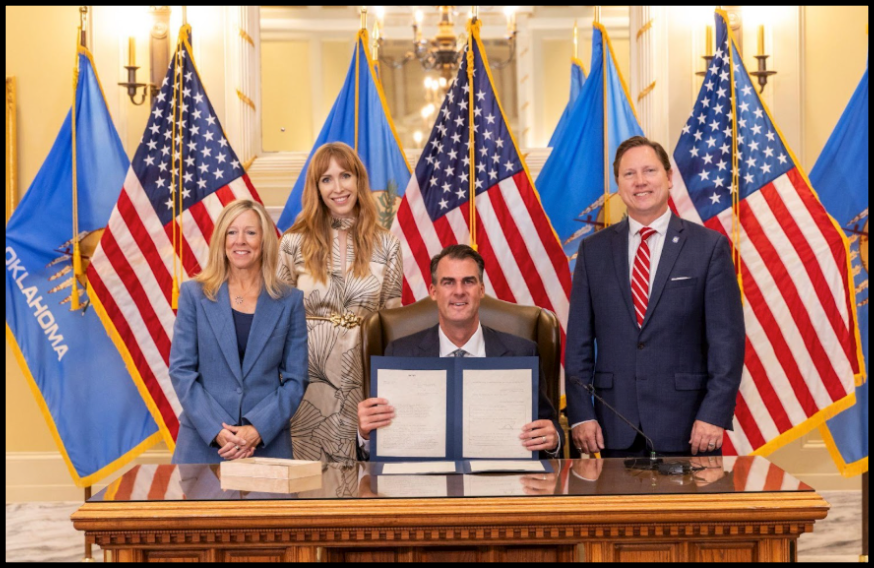
Tricia Everest, Oklahoma’s Secretary of Public Safety, Lauren Krisai, Executive Director of Justice Action Network, and Rep. Brian Hill (R) stand behind Governor Stitt as he signs HB 2364 in 2025
This year, JAN has a very robust legislative session ahead in the state. We will be putting our advocacy and lobbying weight behind the following priorities:
1. Ending cost arrest warrant for unpaid fines and fees
House Bill 3321, sponsored by Rep. Mike Osburn (R), ends the practice of issuing cost arrest warrants for people who have fallen behind on paying their court fines and fees or who fail to appear at a cost hearing, situations that are not criminal offenses.
2. Ending driver’s license suspensions for unpaid court debt
House Bill 4114, sponsored by Rep. Tammy West (R), ends the practice of suspending a person’s license for unpaid court debt, such as traffic tickets, and would make the application retroactive. Many Oklahomans have their licenses suspended not because they are dangerous drivers, but simply because they cannot afford to pay a ticket or fine, or were unaware they had an outstanding ticket or fine. We are currently forming a coalition of Oklahoma employers and other advocacy groups to support this effort.
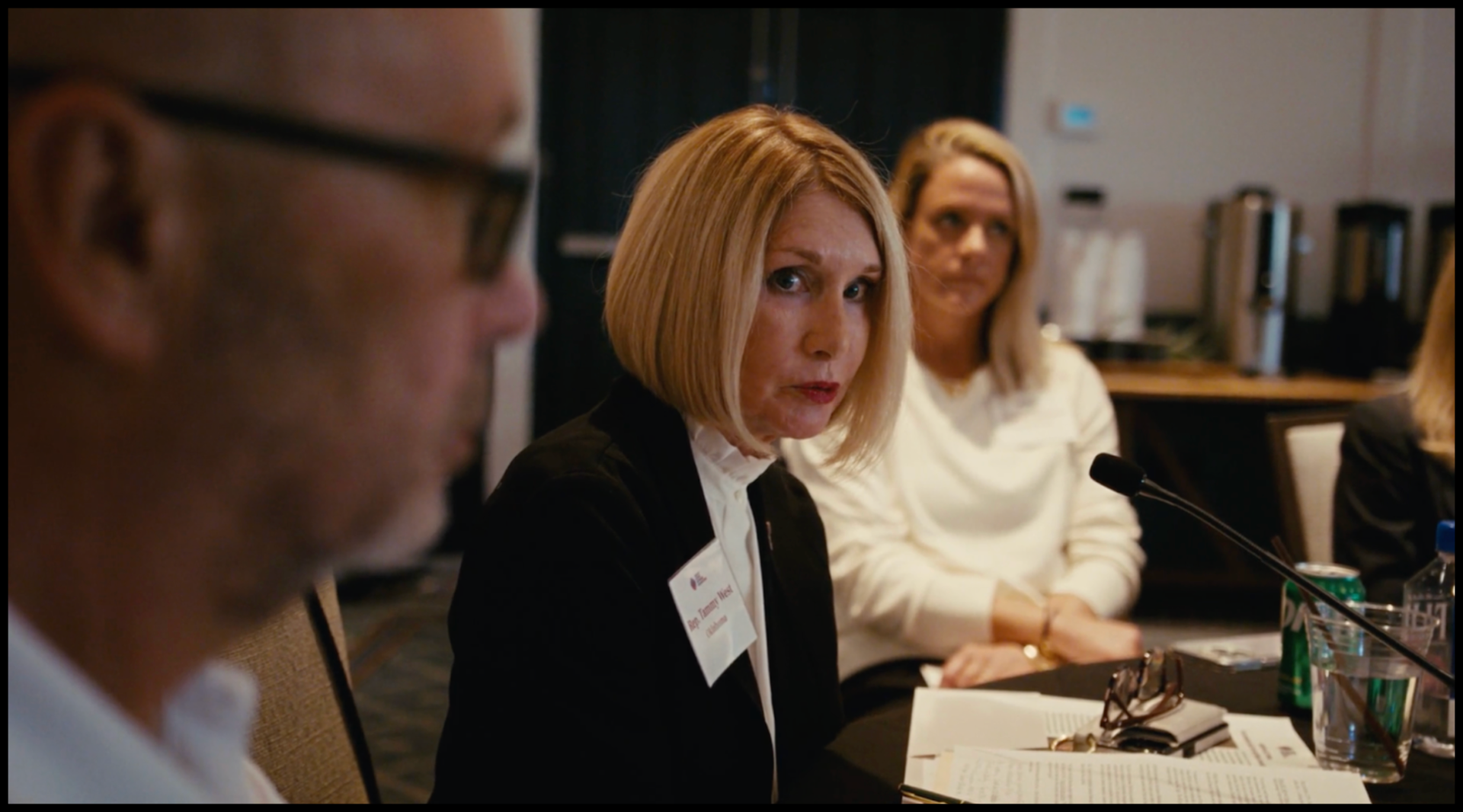
Rep. Tammy West (R) speaking at JANF’s State Lawmaker Convening on Smart Justice Policies, November 2025
3. Requiring remaining court debt be waived following consistent payments
Senate Bill 1450, sponsored by Sen. Julie Daniels (R), requires courts waive remaining court debt for defendants who have paid consistently for 24 months. Currently, statute allows but does not require courts to waive this debt. We are working closely with Prison Fellowship on this bill.
4. Further fee elimination
House Bill 4112, sponsored by Rep. Tammy West (R), builds upon her effort with House Bill 1460 (2025), which eliminated six burdensome fees in the criminal justice system. The Fines and Fees Justice Center is leading the coalition of advocacy groups supporting this bill, of which JAN is happy to be a part of.
5. Clean Slate implementation
Senate Bill 2030, sponsored by Sen. Adam Pugh (R), is a Clean Slate implementation bill. It inserts language into an already existing statute establishing an automatic expungement law and makes that bill fully implementable. We are working in a coalition of advocacy groups and alongside the national Clean Slate Initiative to support this bill.
We see 2026 as another year for Justice Action Network to help shape the future of smart justice policy, and advance reform that lasts. We couldn’t be more ready, and couldn’t do this without your support.
If you’d like to further our reach and impact, please consider making a donation today!